4634 16 Ave NW, Calgary · Minutes from Market Mall
 3x XPEL Dealer of the Year
4634 16 Ave NW, Calgary · Minutes from Market Mall
3x XPEL Dealer of the Year

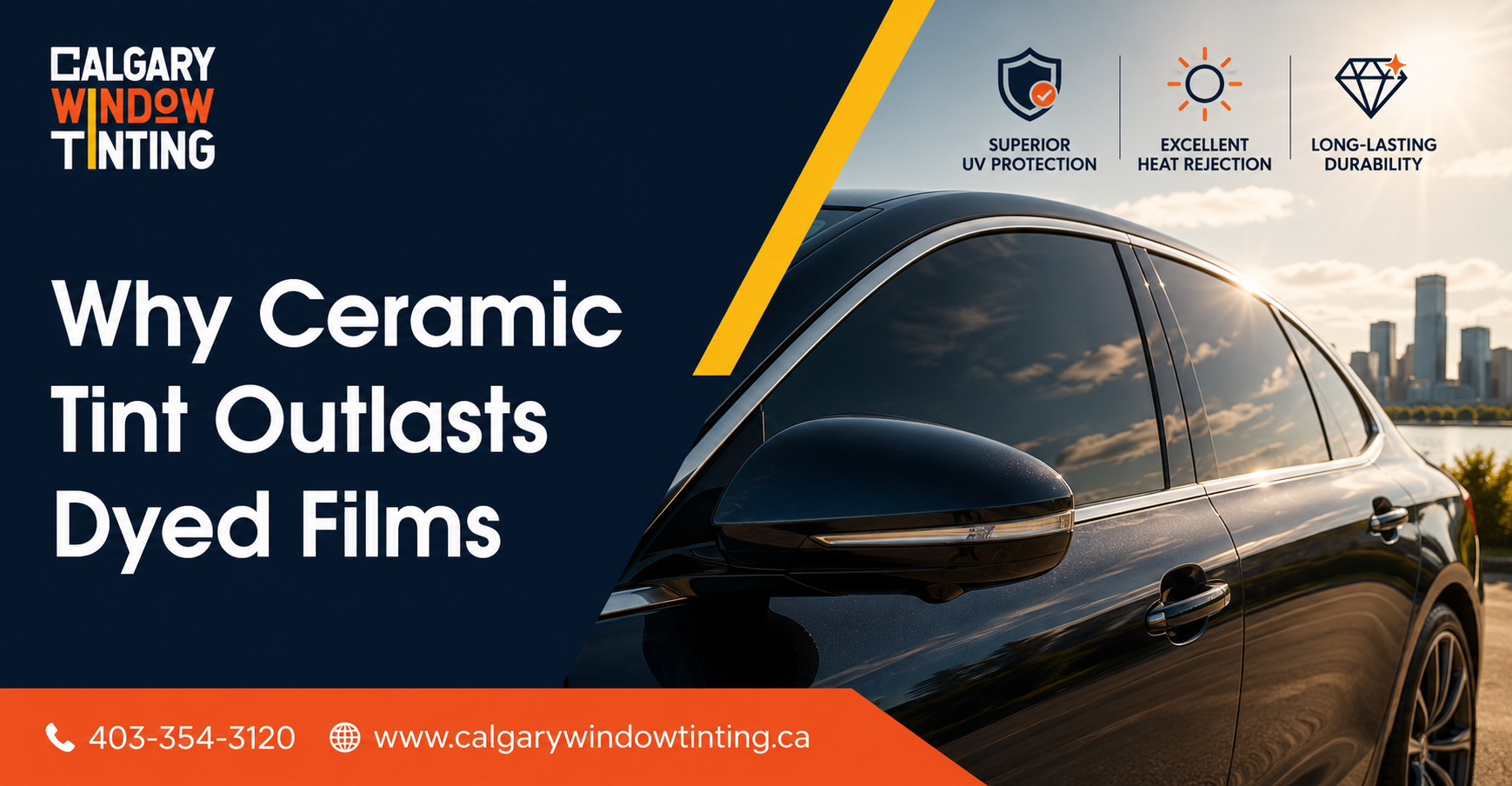
Ceramic tint or simple dye film – which is the better choice?
Sure, dye film means the upfront price is lower. But cheap does not always mean smart. Dyed tint depends on pigments that sit inside the film. Sun, heat, and freeze-thaw cycles wear these pigments down faster than many drivers expect.
Ceramic tint, on the other hand, is clean, consistent, and it actually holds up over time. It helps manage heat and gives your vehicle a sharper finish that does not age badly. Calgary drivers feel the change pretty fast, especially in a climate that swings from blistering sun to hard winter cold.
The real difference is kinda simple. Ceramic film is made for performance first, not just the look. It uses nano-ceramic particles instead of dye, so it stays stable, looks more refined, and blocks more heat without those weak spots that show up with dyed film. That’s why ceramic tint has become the better long-term pick for drivers who care about comfort, appearance, and value.
Learn why more drivers are choosing the ceramic tint these days.
Tint is not just about shade. It is about what the film is made of.
Dyed film works by placing pigment inside the layers of the film. It darkens the window by absorbing light and heat. This sounds useful at first. But in reality, it means the film itself carries a lot of the load. Over time, this load shows up as fading and breakdown. The look and the feel inside the car both change.
Ceramic film works differently. It uses non-metallic ceramic particles that are small enough to stay invisible to the eye. These particles help filter solar energy before it turns into cabin heat.
Not all heat comes through visible light. A lot of it comes from infrared energy. This is where dyed film falls behind. Ceramic film is built to handle that pressure more effectively. This is a core difference. Dyed film focuses on darkness while ceramic film focuses on control.
The better look is not just about being darker. It is about staying clean, even, and consistent. Here are some of the reasons why Ceramic tint always gets the edge over the dyed films.
Dyed tint often starts out looking fine. Then the color shifts. Purple is the most common complaint. It happens because the dyes break down under UV exposure. Once that starts, the film can fade unevenly from one panel to another. It stops looking factory-fresh and starts looking tired.
Ceramic film does not rely on those same unstable dyes. Its color stays more consistent because the material is inorganic. This means the dark, sleek finish you install today is the finish you are far more likely to see years later. For drivers who want their car to keep a neat, intentional look, this matters.
Cheap film is more likely to show flaws. You may see haze, streaks, or a dull finish that looks different from window to window. Once that happens, the whole car loses its polished look.
A quality ceramic film has a clearer, more controlled appearance. It sits on the glass with a cleaner visual profile. From the outside, the car looks sharp. From inside, the view stays more natural. This balance is hard to get from dyed film.
Heat is the enemy of weak adhesive. Calgary weather brings plenty of stress to the films. Summer sun, winter cold, and constant temperature swings all push the film to expand and contract. Dyed film often struggles here. The adhesive weakens, bubbles form, and the edges begin to lift.
Ceramic film is built with stronger, more weather-stable materials. This helps it stay flat and smooth for longer. The result is a cleaner finish that does not call attention to itself for the wrong reasons.
Durability is where the gap gets wider. Calgary drivers deal with strong UV exposure, cold snaps, and long periods of direct sun. These conditions are rough on lower-grade film. Dyed tint starts to dry out and lose flexibility. Once that happens, cracks and peeling are not far behind.
Ceramic film handles those conditions better. These are built for long-term stability. They keep blocking UV rays without falling apart. It also keeps working on heat rejection without relying on metal layers or unstable dyes. This is crucial in a city where one season can test every part of a vehicle.
It also avoids a major downside of older premium films. Since ceramic film is non-metallic, it does not interfere with cell service, GPS, Bluetooth, or satellite radio. You get the performance without the signal issues that some older films caused.
Discover the top ceramic coating maintenance tips to keep your vehicle shining.
A cheap tint job can look like a smart spend on day one. The problem shows up later. If the dyed film fades in a few years, the car owner pays twice. First for the original install. Then again, for removal and replacement. Tint removal takes time. It adds labor and costs more than people expect. A low upfront price does not help much when the film needs to come off early.
Ceramic film usually costs more at the start. But the good thing is that it gives more back over time-
Keeps the car cooler and the windows looking better
Protects the interior from sun damage
Helps preserve resale value because the car looks cared for, not patched together.
At a glance, dyed film and ceramic film may seem similar. In practice, they are not close. Dyed tint mainly offers darkness at a lower price. Ceramic film gives you a cleaner look, better heat control, stronger color stability, and a longer service life. For Calgary conditions, this difference is hard to ignore.
If you want your vehicle to keep its finish, feel cooler inside, and avoid the purple fade that makes cheaper film look old before its time, ceramic is the better route. At Calgary Window Tinting, we install premium tint solutions, including XPEL options. We have factory-trained installers serving Calgary drivers who want a precise fit and lasting results.
For drivers who care about comfort, clarity, and long-term value, ceramic tint is the upgrade that makes sense from the first drive to the last. To get yours contact us today.
 403-354-3120
  7 Days 7:00 AM - 9:00 PM